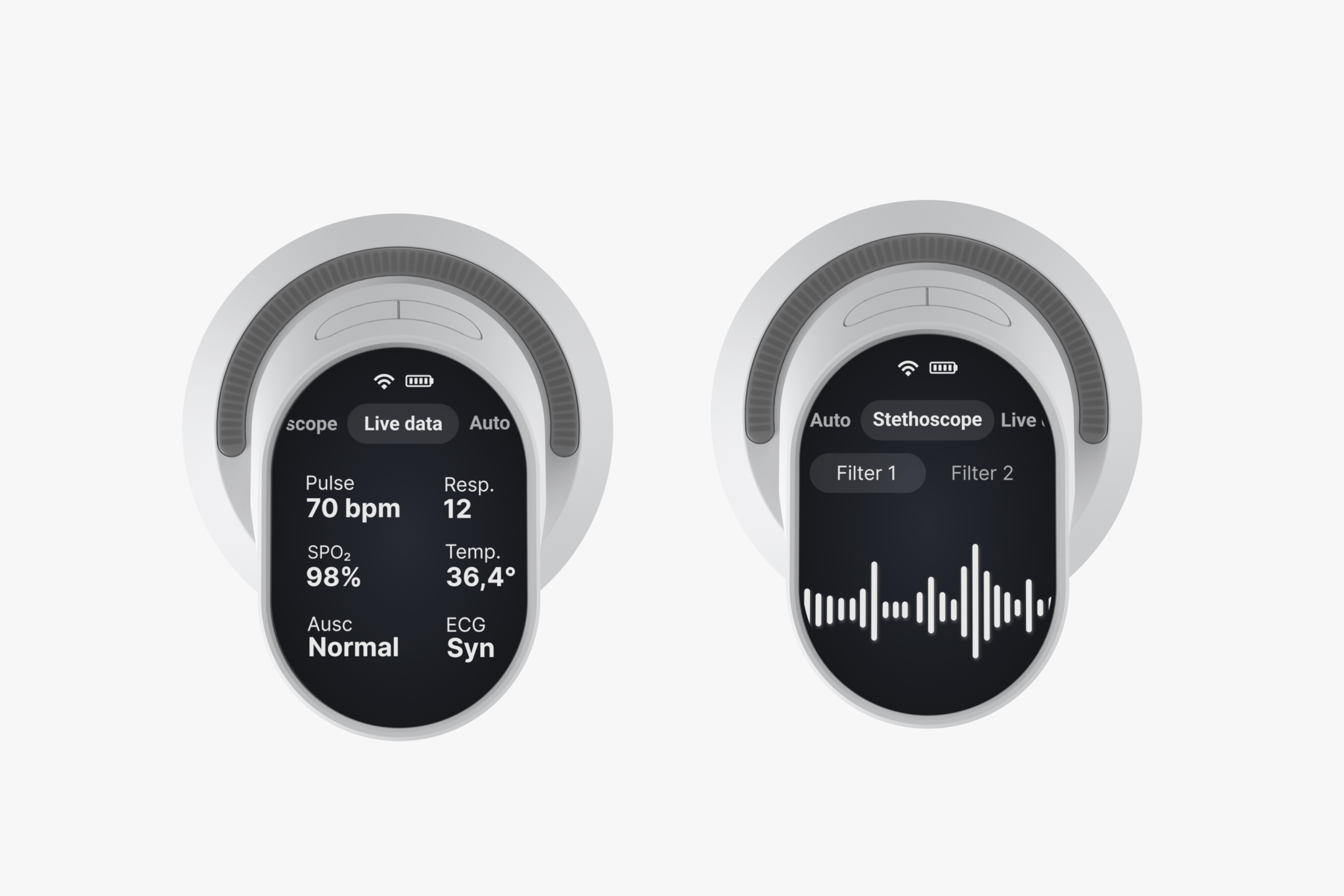
RESPONSE — DIGITAL STETHOSCOPE | 2022
The project, carried out in a team of two, was both client work and a university project. In addition to standard product design, we also developed the interactions, workflow and user experience — essentially how the device works, interacts with the user and supports medical professionals’ workflows.
CLIENT
Vital Signs research group, university project
SCOPE
Product design, UI, UX
BACKGROUND AND CONTEXT
The issue with traditional stethoscopes is that physicians’ time with individual patients is short. Within this time, they must perform numerous examinations such as heart and lung auscultations. Stethoscopes, the devices used for these measurements have remained fairly dated in their design and working principles, creating room for innovation.
Vital Signs, a research group from Aalto University has been developing a medical device to replace the stethoscope. The device utilizes AI to enable faster and more accurate diagnoses.
Although Vital Signs had created a rough prototype for research purposes, the device lacked a tangible design. To bring the project closer to being market-ready, the product would require clear working principles, an appealing form, a well thought-through user experience and user validation.

IDEATION
USER FLOW DIAGRAM
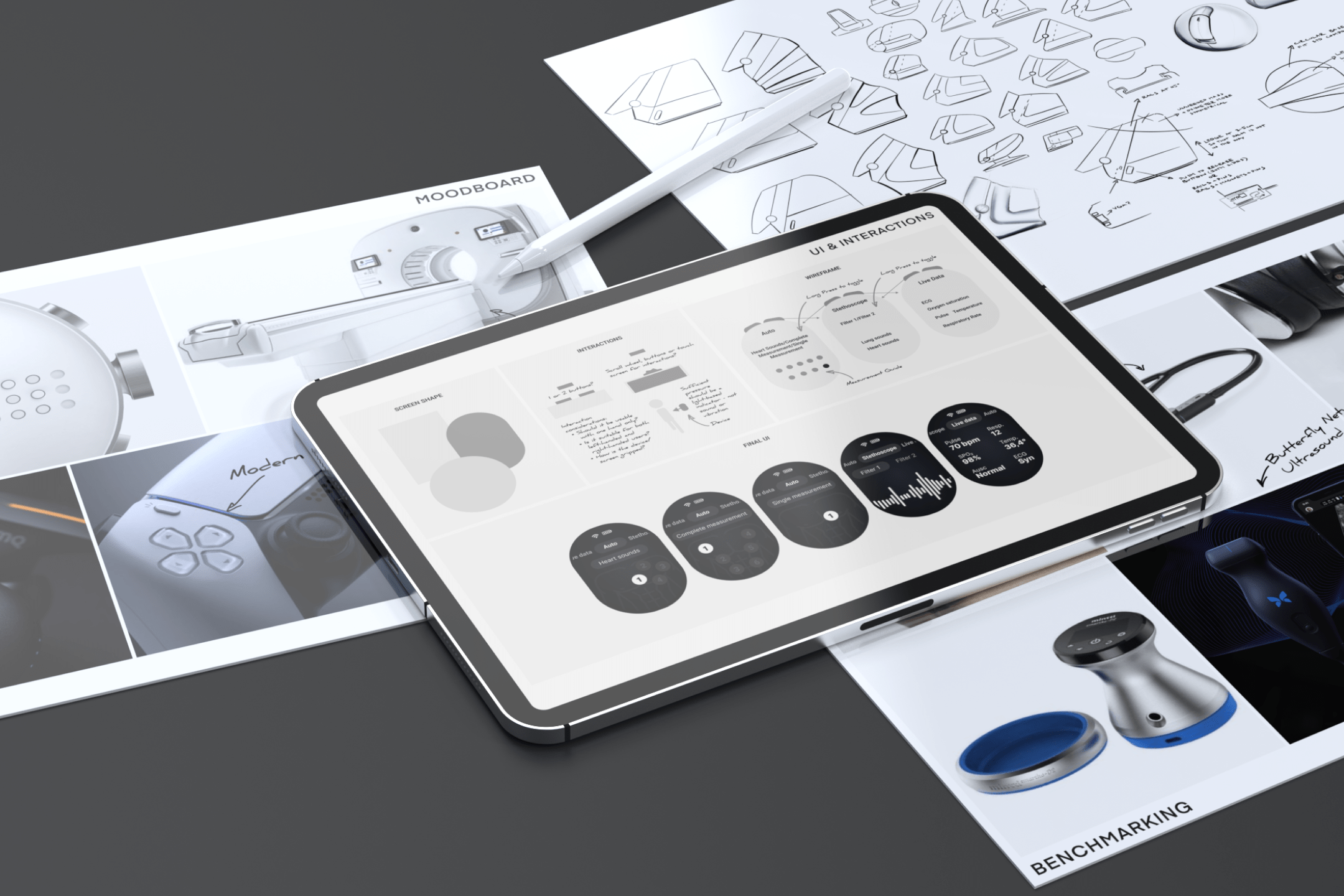
The user flow diagram comprehensively maps out how the user interacts with the device in different scenarios.
Initially, the interactions, usability and workflow of the device was to be grounded in data from user research, interviews and a cultural probe we had designed. Unfortunately, recruiting medical professionals proved to be challenging, which restricted the interaction design process to desktop research, brainstorming and simply stepping into the user’s minds. Fortunately, we also gained valuable insights from our client who is a general practitioner.
The challenge was to balance a seamless, automated user experience while maintaining a high level of versatility, such as the ability for doctors to use the device as a traditional stethoscope. Moreover, constraints such as the technical limitations of the AI also heavily affected the proposed workflow.
PROTOTYPING
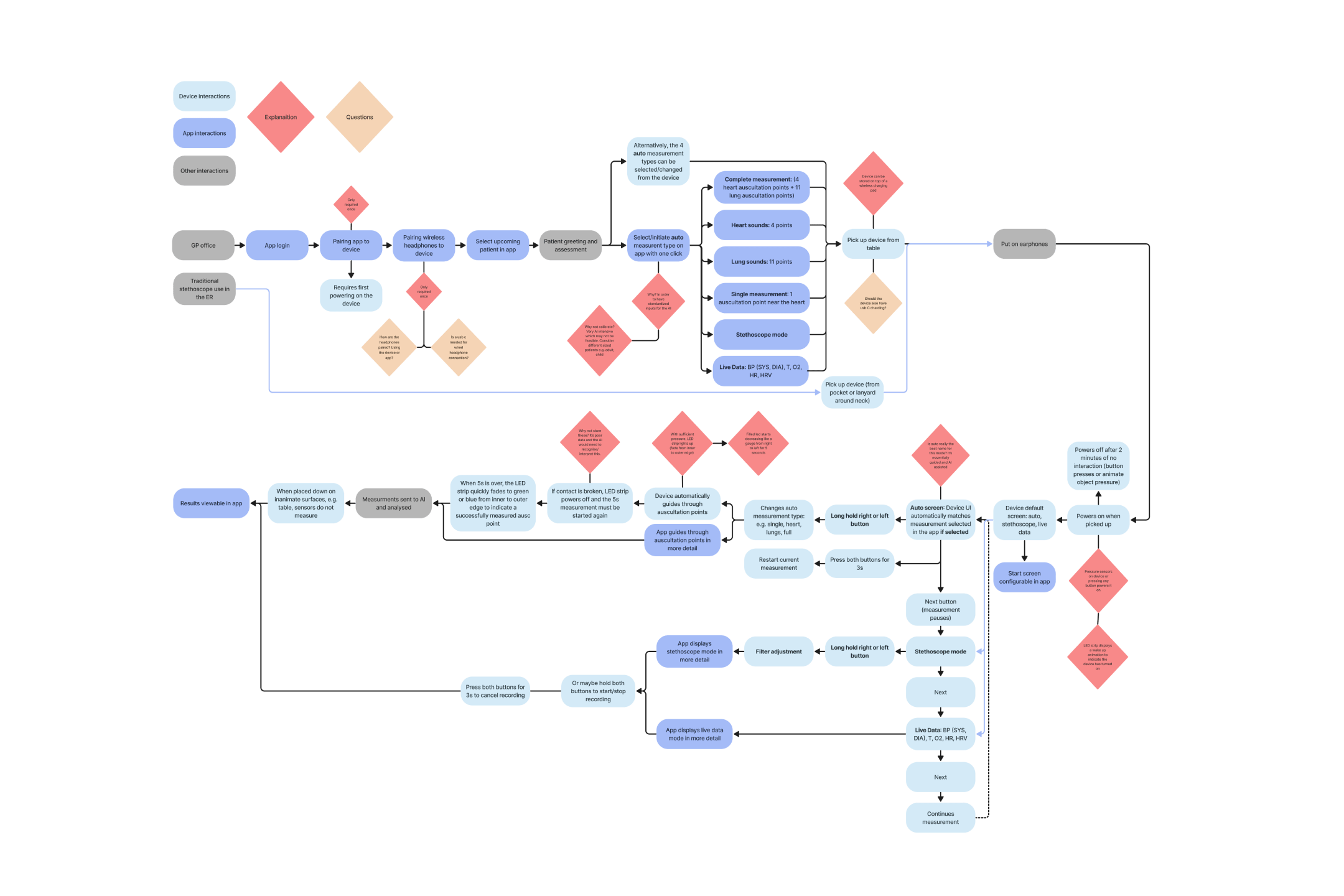
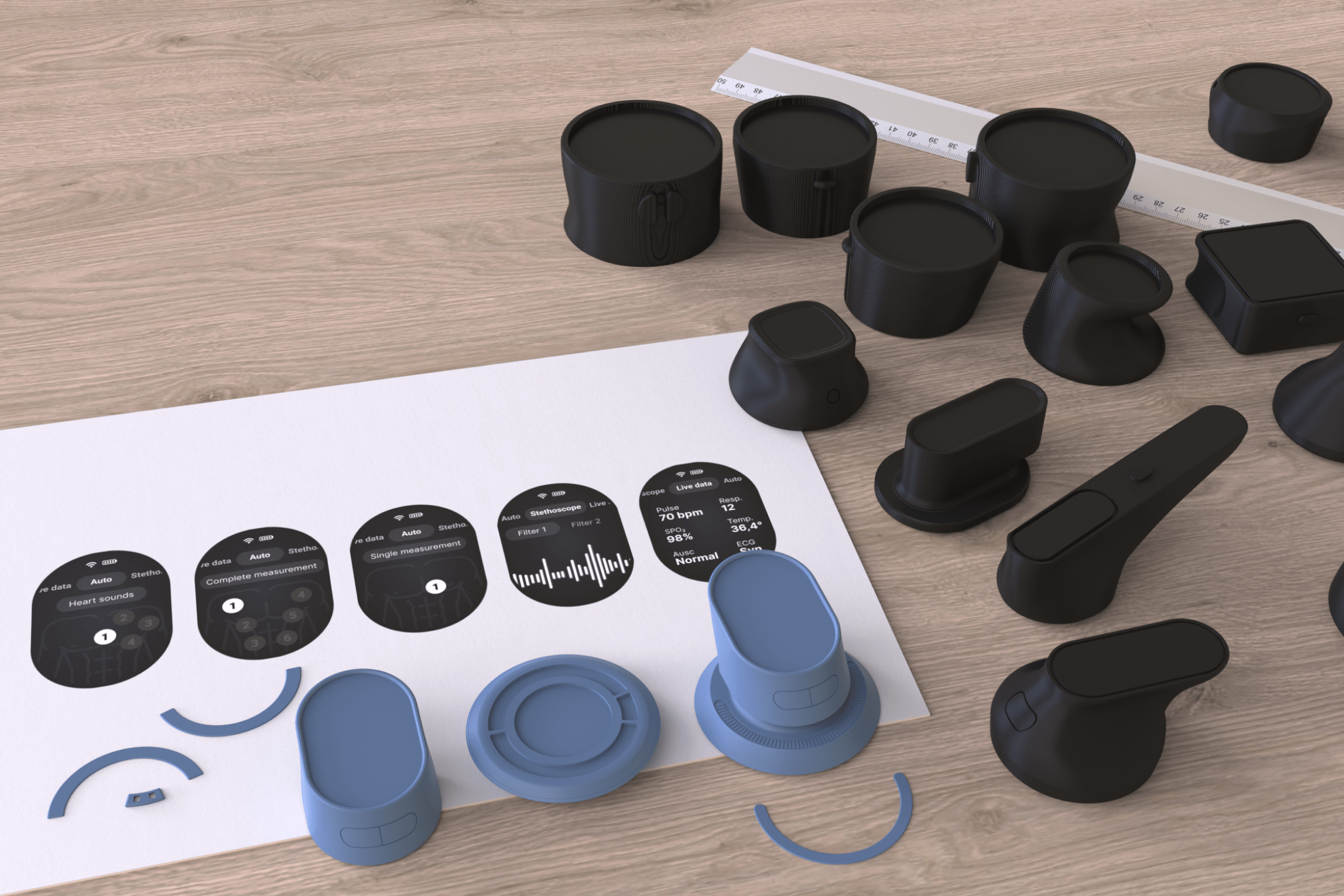
Numerous prototypes were 3D printed to explore the design space and refine the device’s form. Through iteration, a list of successful features and shapes was constructed. For example, it was found that a 20-45° angle between the base and screen allowed for better visibility, and button placement on the top-middle worked well for both left and right handed users. The most successful prototypes were evaluated with the client in order to select one to take further. Additionally, a higher fidelity prototype was created with CNC milling.
UI prototypes of the device’s screen were designed on Figma, based on the interaction design exploration.
THE DEVICE
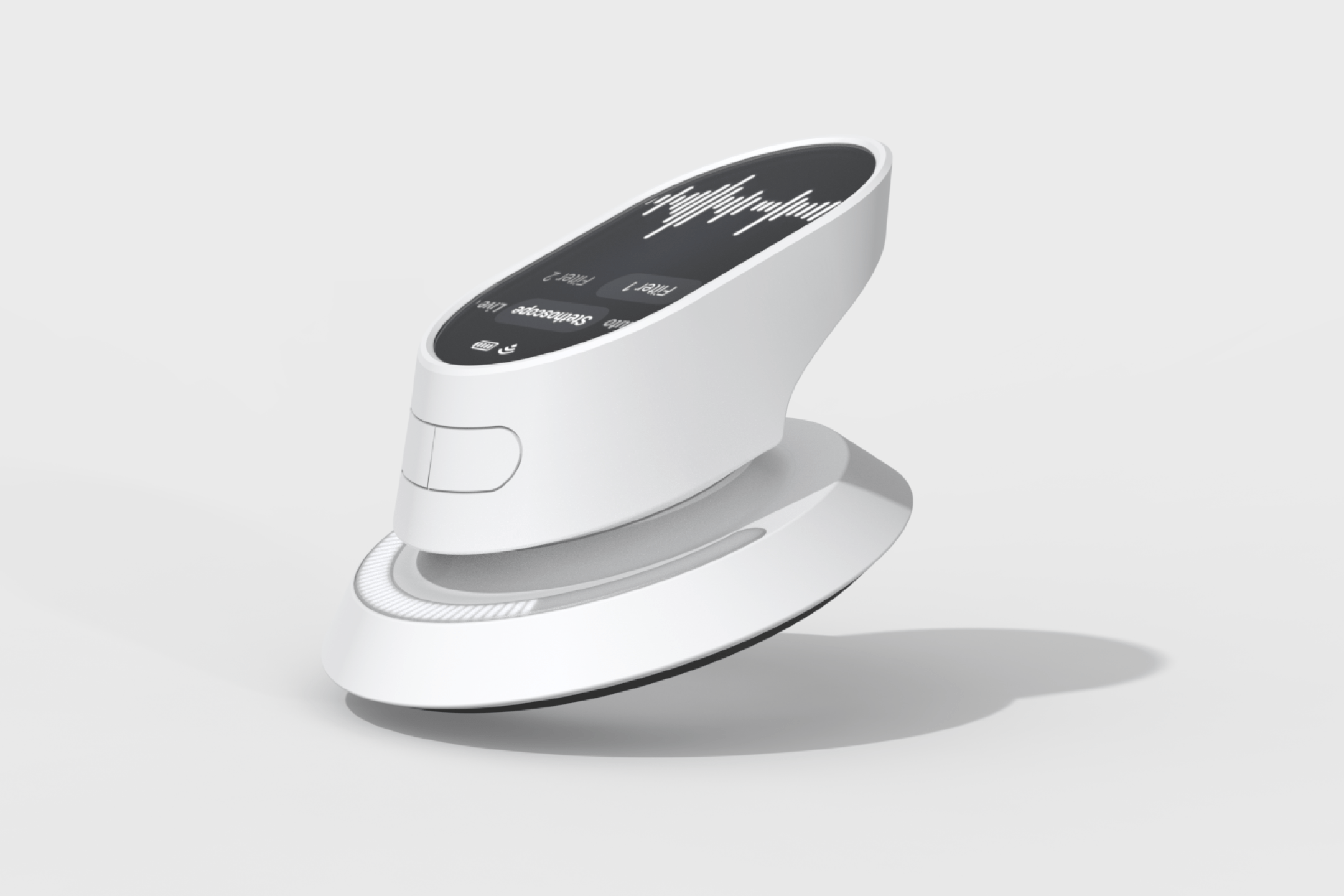
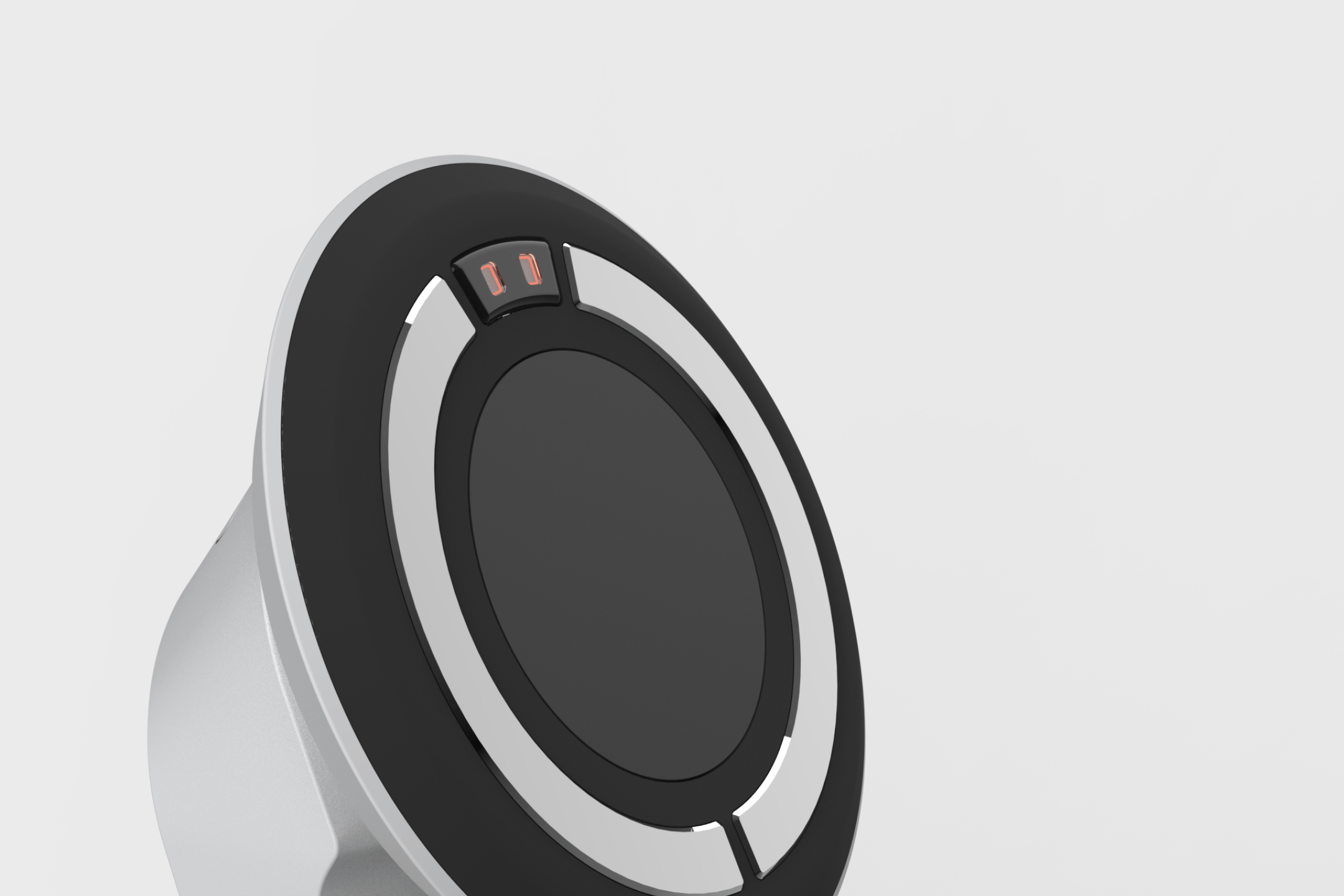
The Response device seeks to reimagine the traditional stethoscope for the modern, digital landscape by utilizing advanced data-sharing and AI diagnosis assistance capabilities.
Thinking beyond auscultation, the device measures up to nine biosignals.
FEATURES: CASE AND EARPHONES
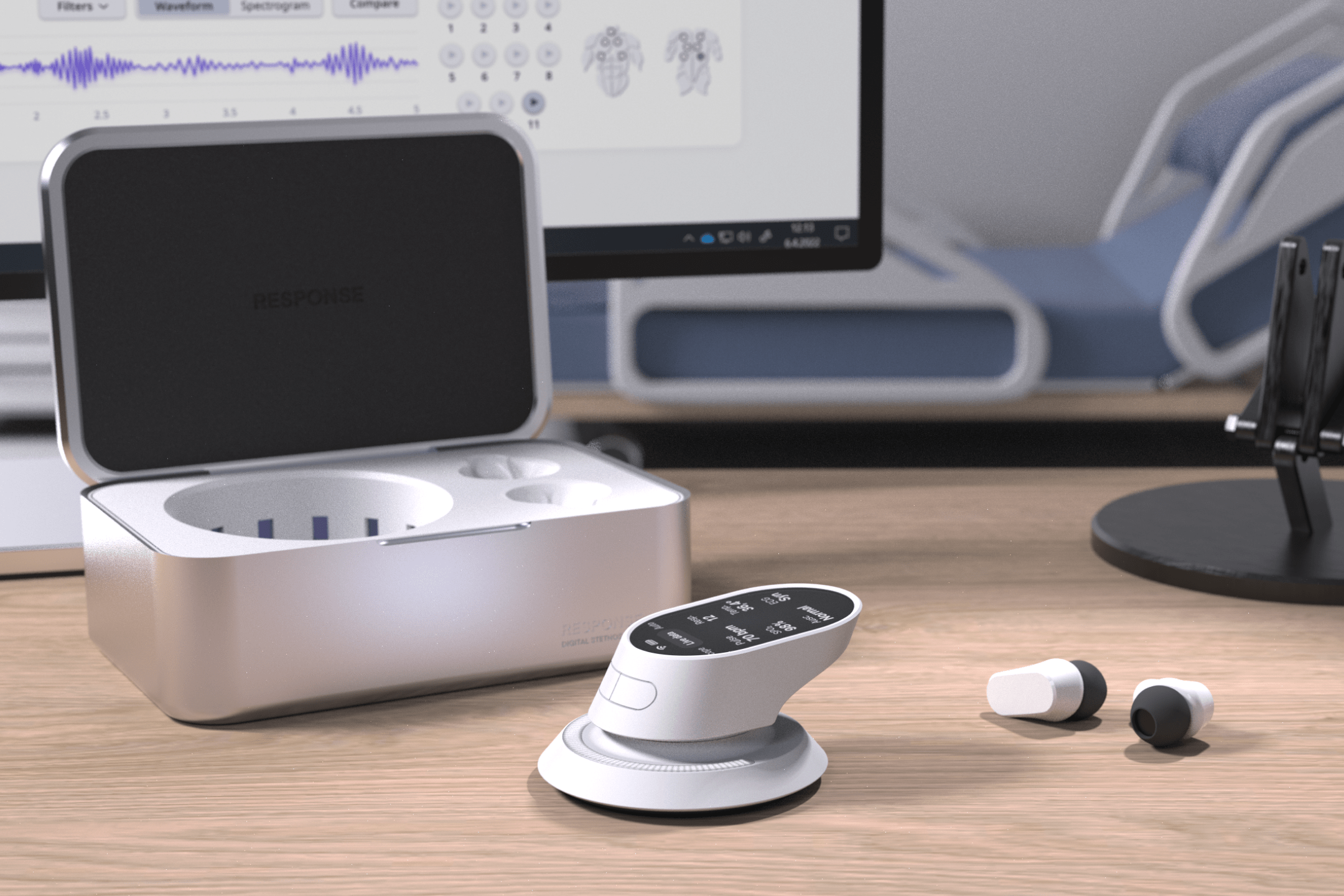
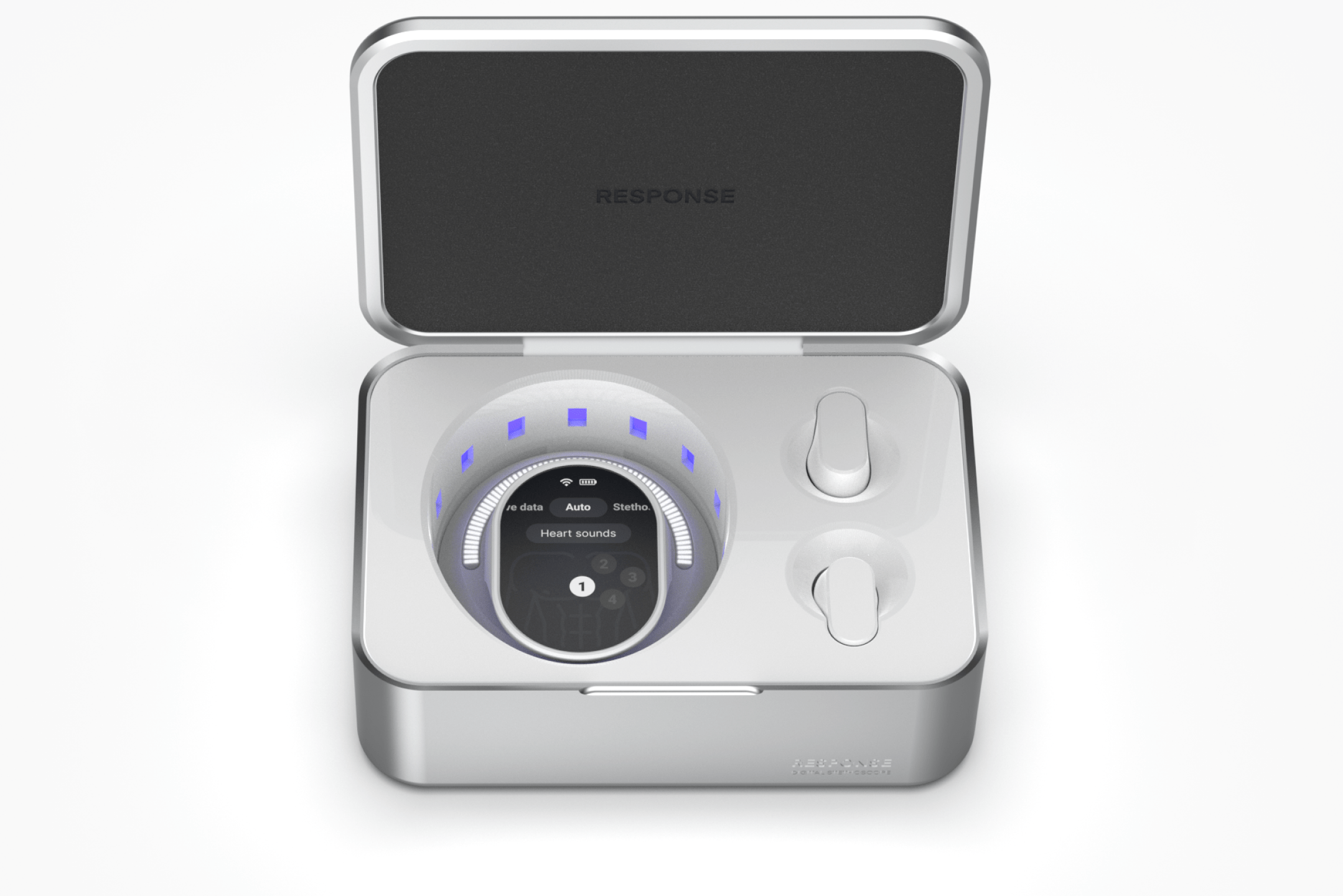
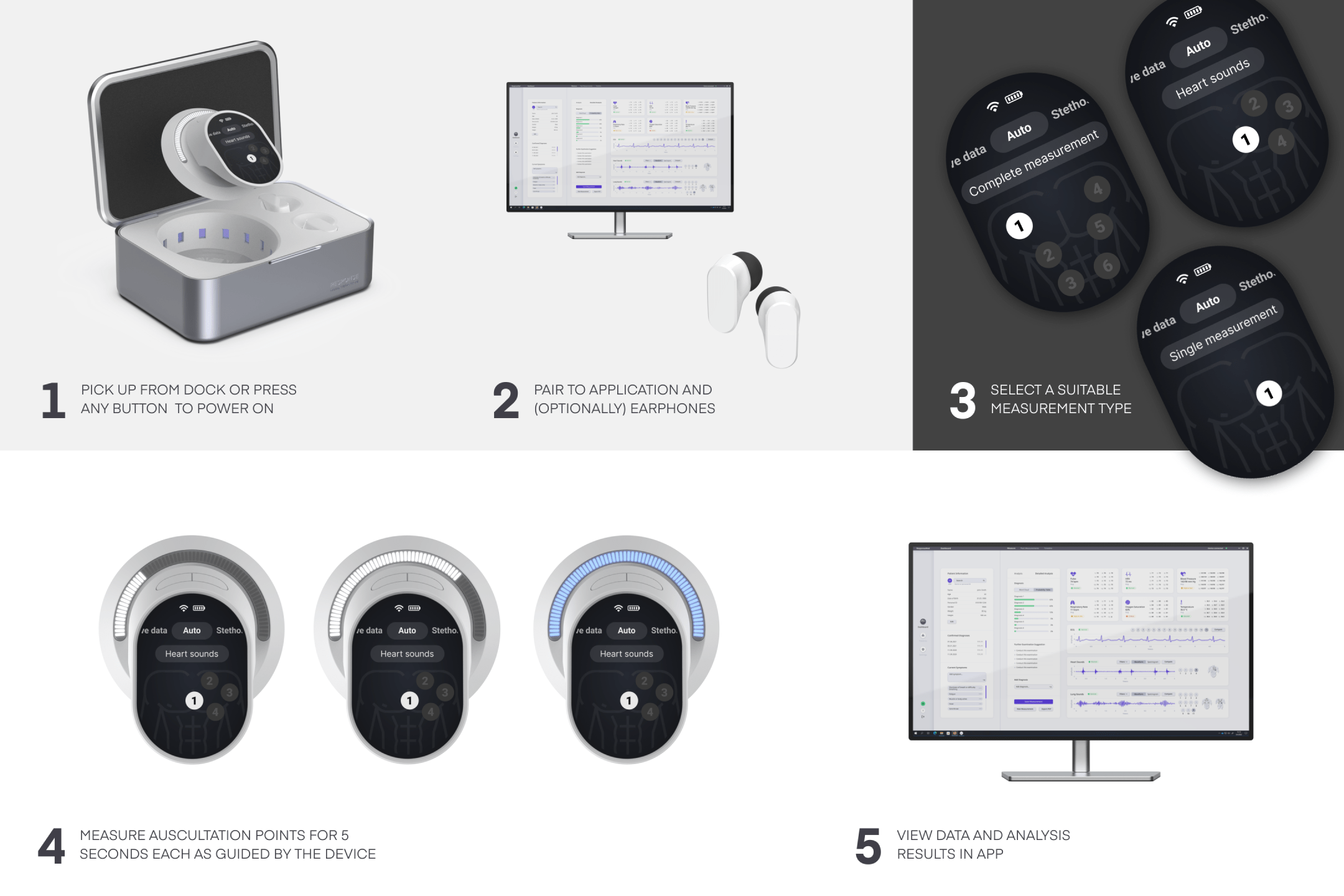
The device comes with a UV sanitizing case, also equipped with wireless charging. The case holds custom earphones which may be paired to the device.
THE SYSTEM
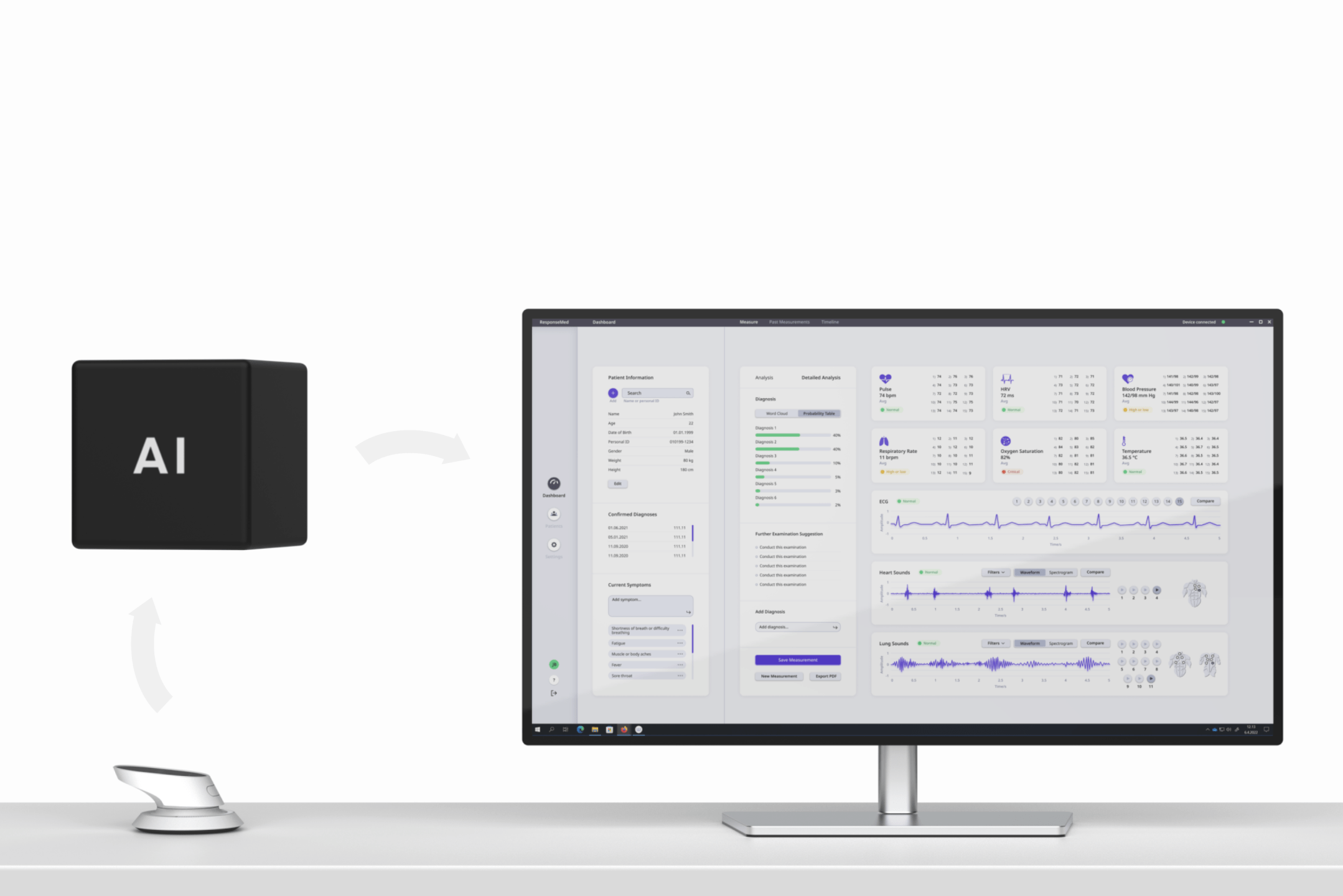
The device is part of a larger system. Sensor data from the device is sent to an AI which produces a probable diagnosis as well as a proposal of any necessary follow-up examinations. Sensor data as well as AI analysis results are viewable on the Response desktop application, which also allows for long-term data tracking in its “timeline” view.
ADDITIONAL USE CASES
The device may also be used as a traditional stethoscope, thermometer, pulse oximeter and blood pressure monitor.